Multi-Agent Orchestration: Autonomous Collaboration in Supply Chains
Wednesday, 15 Oct 2025
|
Multi-Agent Orchestration: Building Supply Chains That Think and Act Independently
Introduction: The Dawn of Autonomous Supply Chain Ecosystems
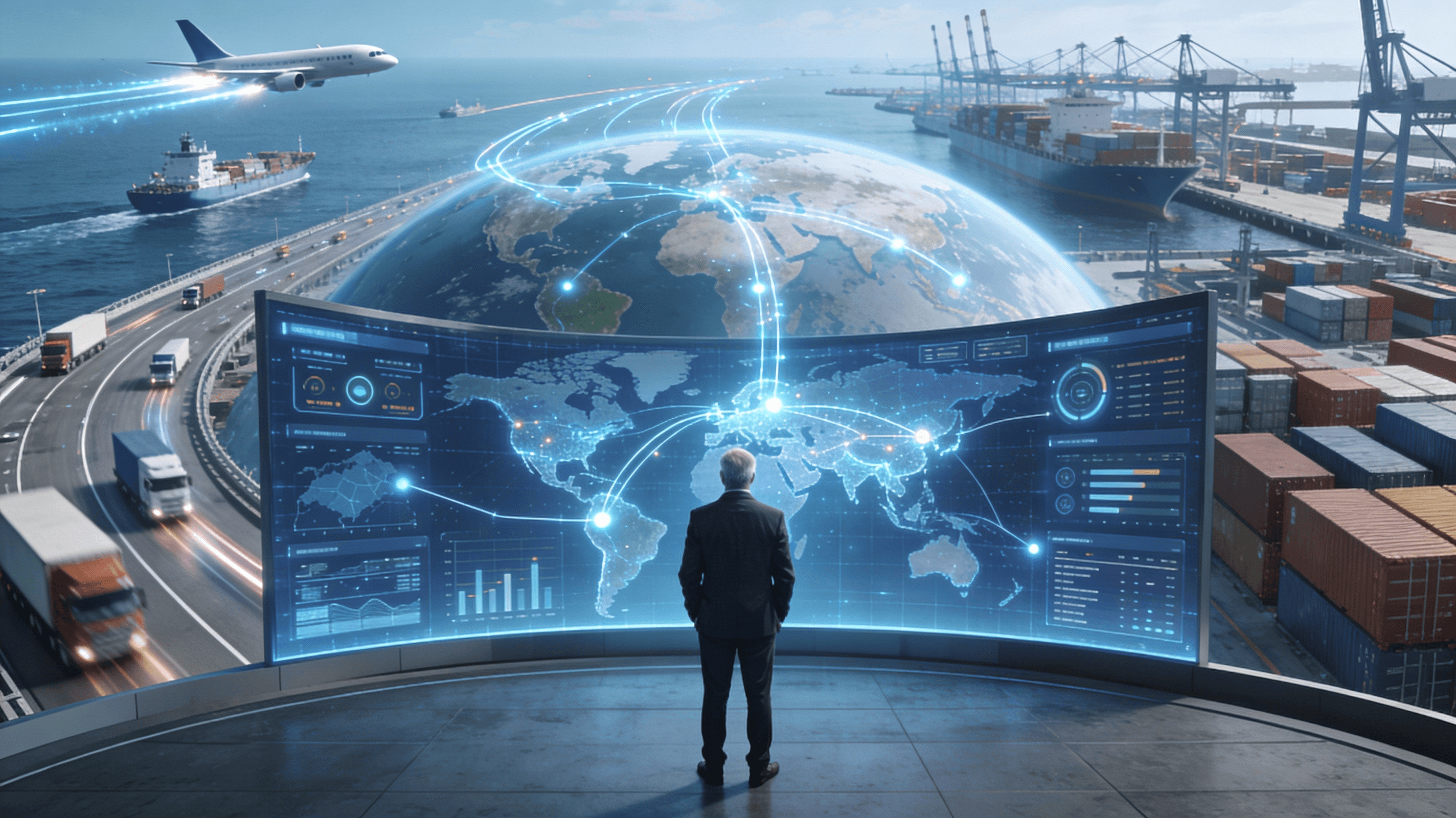
In the rapidly evolving logistics landscape, single AI systems handling isolated tasks are giving way to multi-agent orchestration—an advanced approach where specialized AI agents collaborate seamlessly, independently driving end-to-end supply chain processes. This new paradigm promises supply chains that don’t just operate but think and act with intelligence across procurement, warehousing, transportation, and customer service—without constant human intervention.
For logistics executives, understanding how multi-agent orchestration unfolds is critical to unlocking unprecedented efficiency, agility, and responsiveness in complex global operations.
What Is Multi-Agent Orchestration?
Multi-agent orchestration involves deploying multiple specialized AI agents, each designed for domain-specific tasks, that interact, negotiate, and cooperate autonomously to achieve shared supply chain goals. Unlike monolithic AI solutions, this architecture mimics how human teams operate—distributing responsibilities and dynamically coordinating actions for optimal outcomes.
Specialized AI Agents and Their Roles
- Procurement Agents: Monitor market supply conditions, negotiate with vendors, place orders, and optimize inventory replenishment based on demand forecasts autonomously.
- Warehousing Agents: Manage stock levels, direct automated picking systems, schedule maintenance, and optimize layout and space in real time.
- Transportation Agents: Plan routes dynamically, dispatch carriers, track shipments, and resolve disruptions by rerouting autonomously.
- Customer Service Agents: Handle inquiries, provide proactive shipment updates, issue refunds or reschedule deliveries based on AI-driven decision trees and sentiment analysis.
How These Agents Collaborate Without Human Intervention
- Communication Protocols: Agents use APIs and machine-readable contracts to share status updates and requests instantaneously, ensuring synchronization of activities like order placement and shipping scheduling.
- Goal Alignment: Each agent operates with shared KPIs, such as on-time delivery and cost minimization, enabling cooperation that balances local task objectives with global supply chain performance.
- Conflict Resolution: Agents negotiate resource constraints (e.g. limited warehouse space vs. urgent shipments) using game-theoretic strategies to find optimal compromises.
- Learning and Adaptation: Agents continuously learn from interactions, refining workflows, improving forecasting, and adjusting collaboration strategies.
Real-World Impact: Autonomous Supply Chains in Action
- End-to-End Visibility: Multi-agent systems provide seamless integration of procurement forecasts, stock levels, transport availability, and customer updates, creating a synchronized, transparent supply chain.
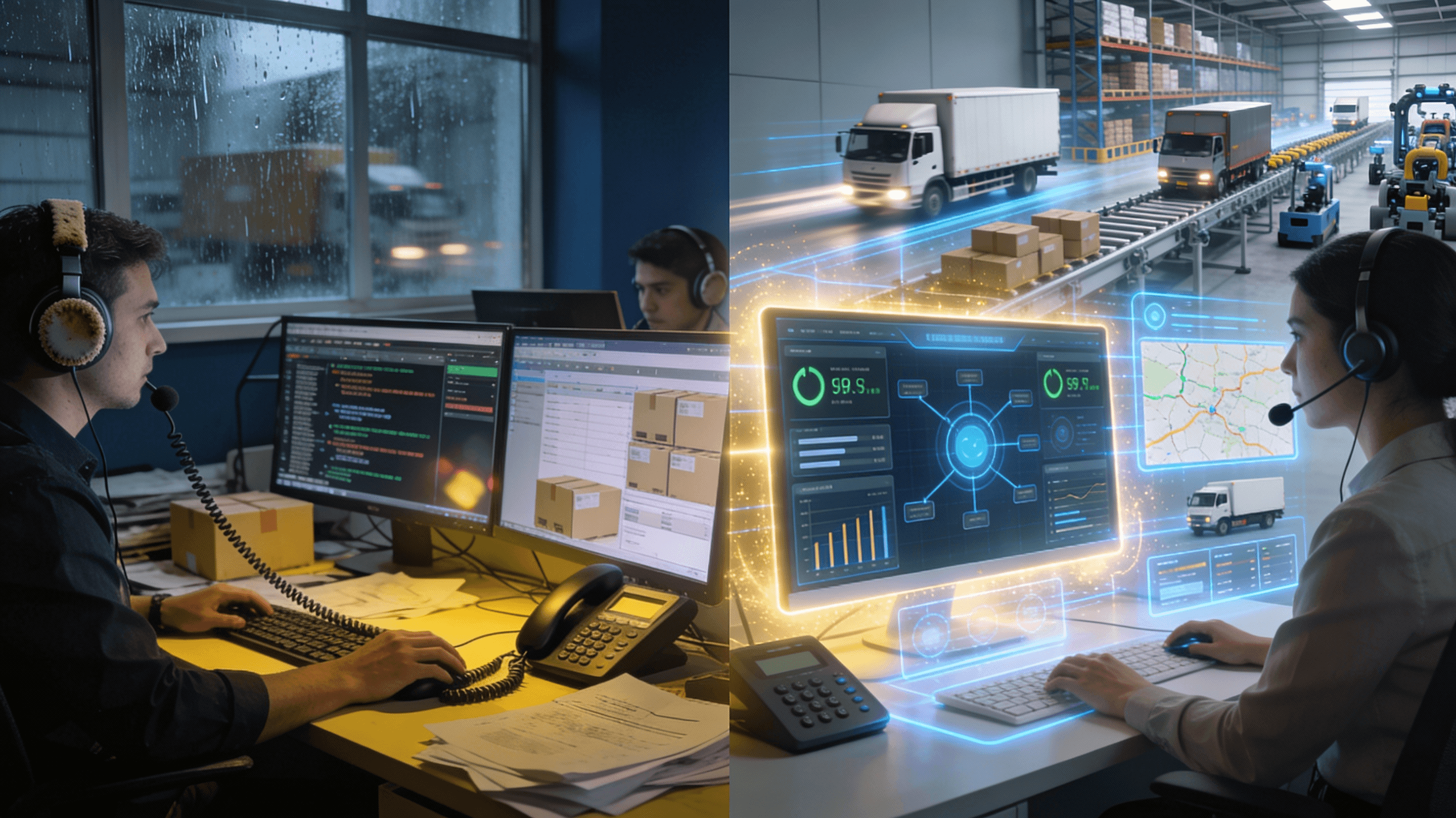
- Reduced Human Oversight: By autonomously managing exceptions and routine decisions, these multi-agent environments drastically reduce the need for manual coordination.
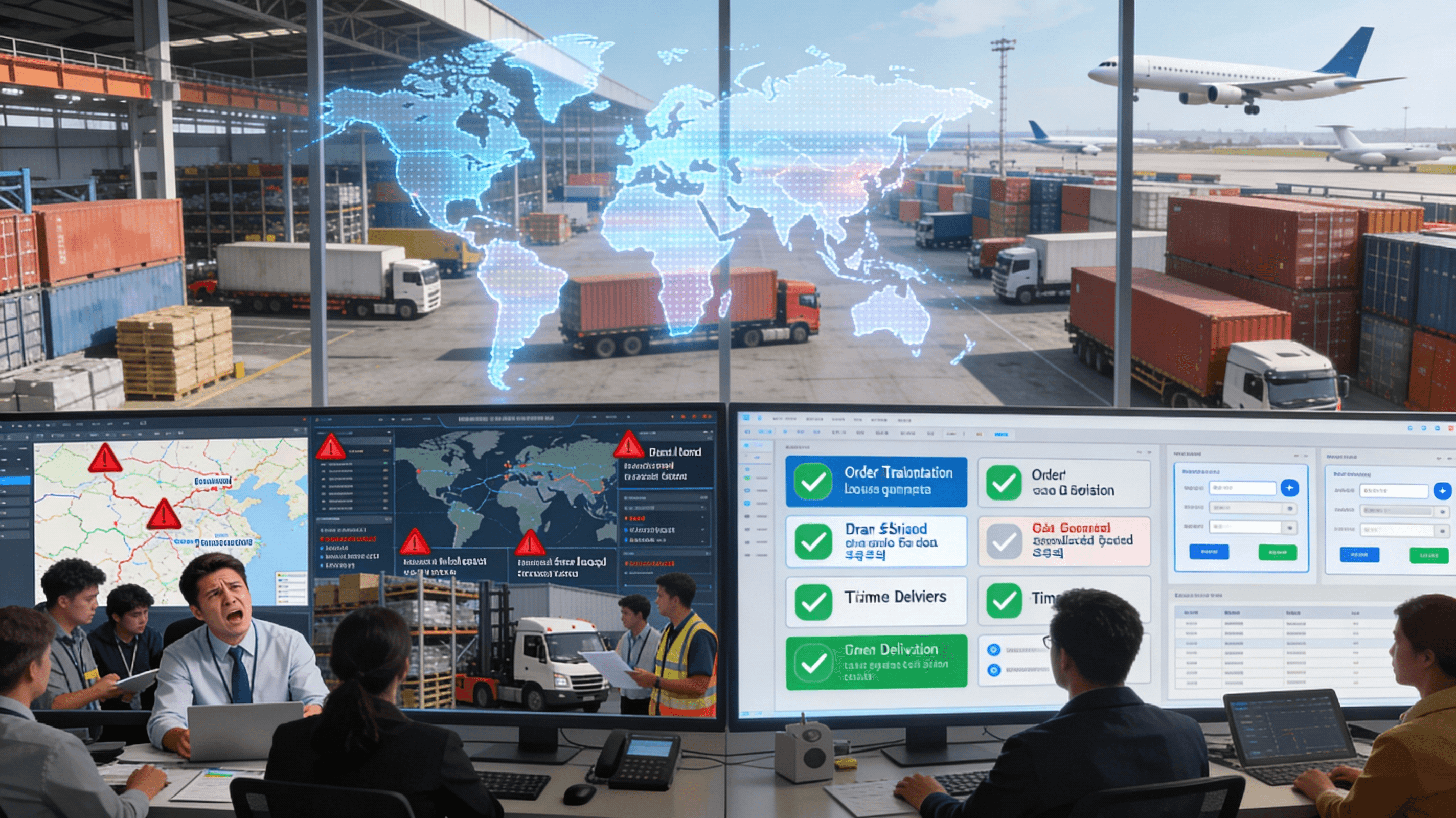
- Operational Agility: Supply chains equipped with multi-agent orchestration swiftly adjust to unexpected events like port delays or demand spikes, maintaining fulfillment performance.
- Cost Optimization: Dynamic negotiation and resource allocation among agents optimize transportation routes, warehouse utilization, and inventory holdings—driving cost efficiencies.
Implications for Logistics Executives
Multi-agent orchestration unlocks a new supply chain operating model where human management elevates to exception handling, strategy, and innovation. For CXOs, this means:
- Investing in interoperable AI platforms supporting agent communication and collaboration standards.
- Prioritizing data quality and integration across systems to empower effective agent interactions.
- Reconfiguring supply chain governance to balance autonomy with oversight.
- Cultivating teams skilled in AI orchestration and change management.
Discover Multi-Agent AI for Your Supply Chain
Harness the power of multi-agent AI orchestration to build resilient, autonomous supply chains. Book a demo with debales.ai and explore how our interconnected AI agents collaborate across procurement, warehousing, transportation, and customer service to transform your logistics operations.
Further Exploration
- How AI Drives Freight Procurement and Pricing Improvements
- AI-Powered Tracking: The Future of Delivery Transparency in Logistics
- From Cost-to-Serve to Profit-to-Serve: AI-Powered Pricing for Logistics
Conclusion: The Future Is Collaborative, Autonomous Supply Chains
Multi-agent orchestration heralds a future where supply chains think and act as integrated, autonomous systems, driving unparalleled efficiency, agility, and customer satisfaction. Logistics leaders who embrace this collaborative intelligence model will unlock new performance frontiers, redefining operational excellence in 2025 and beyond.